By Quise Varoz
OMAHA Neb. – Storm season is approaching in eastern Nebraska, and meteorologists say residents should prepare now before severe weather strikes.
March through May marks the peak period for tornadoes, hail, strong winds, flash flooding and severe thunderstorms across the region. According to the National Weather Service in Omaha/Valley, storms in eastern Nebraska can develop quickly, leaving residents with little time to react once warnings are issued.
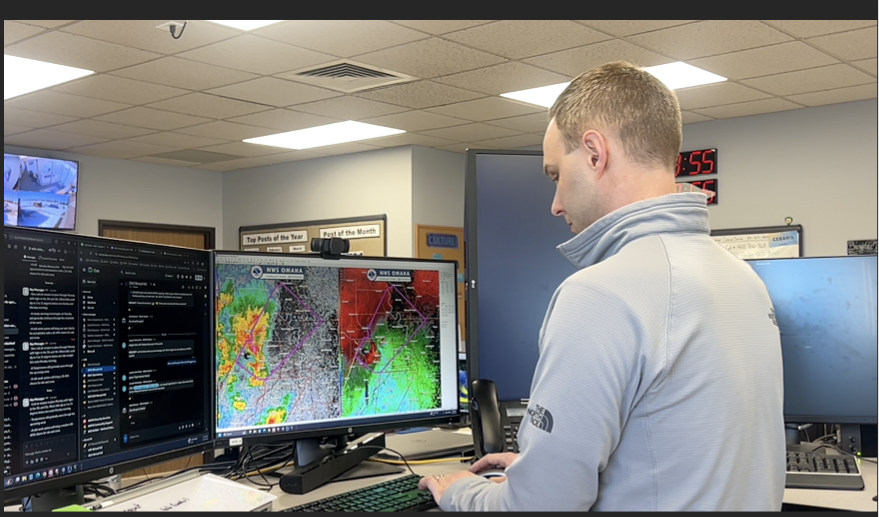
A meteorologist monitors radar data at the National Weather Service office in Omaha, Neb. Meteorologists say storms in eastern Nebraska can develop quickly, making early preparation critical during peak severe weather season. (Photo by Quise Varoz / Omaha News)
Clint Aegerter, a meteorologist with the National Weather Service in Omaha, says the time between the first radar signal and a severe weather warning can be short.
“Seeing the first blip on radar to a full severe thunderstorm warning, it can be as little as twenty to thirty minutes,” Aegerter said.
That limited timeframe means preparation should happen before severe weather alerts are issued.
Eastern Nebraska sits in an area often associated with Tornado Alley, where warm, moist air from the Gulf of Mexico collides with cooler air from the north and west. These conditions frequently create powerful thunderstorms capable of producing tornadoes, damaging winds and large hail.
Flash flooding is also a major concern during the spring storm season. Heavy rainfall and slow-moving storms can quickly overwhelm drainage systems and create dangerous driving conditions.
Meteorologists say having a safety plan and emergency kit can help families respond quickly when storms move in.
Aegerter recommends preparing supplies that include bottled water, nonperishable food, batteries, a weather radio and necessary medications.
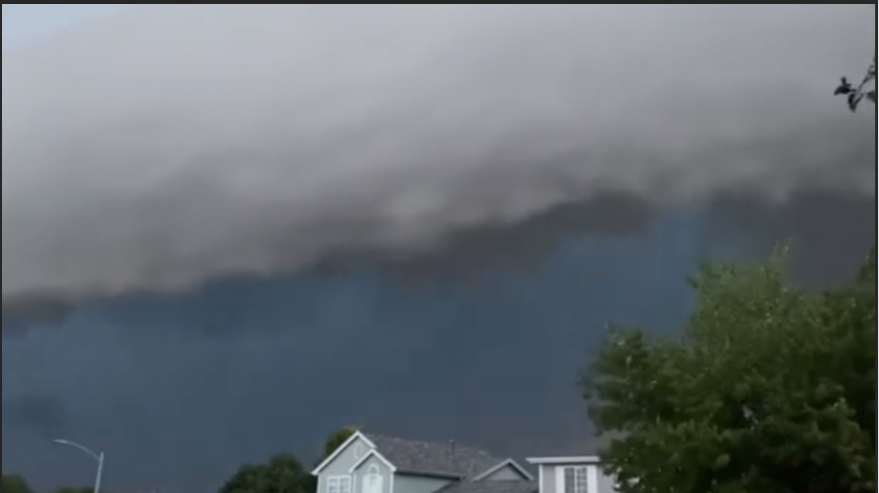
Dark storm clouds form over a neighborhood in Omaha, Neb. Severe thunderstorms during the spring season can produce hail, damaging winds and tornadoes across eastern Nebraska. (Photo by Quise Varoz / Omaha News)
Knowing the safest location in a home is also critical during severe weather.
“Your basement is your number one place,” Aegerter said. “If you don’t have a basement, find an interior room that’s protected by walls and away from windows.”
Experts say deciding where to go after sirens sound can waste valuable time. Instead, residents should identify their safe place ahead of time and make sure emergency alerts are enabled on their phones.
With peak severe weather season approaching, meteorologists say preparation now can make the difference between panic and protection when storms strike.