Ivan Tovar
As Omaha’s workforce becomes increasingly diverse, some employers are examining whether employees who speak more than one language should receive additional compensation for their skills.
Multilingual ability can play a critical role in industries such as healthcare, education and community services, where clear communication directly impacts outcomes. Experts say bilingual employees often help reduce misunderstandings and improve efficiency.
Steven Torres, a Spanish world languages professor at the University of Nebraska at Omaha, said multilingual workers bring measurable value to organizations.
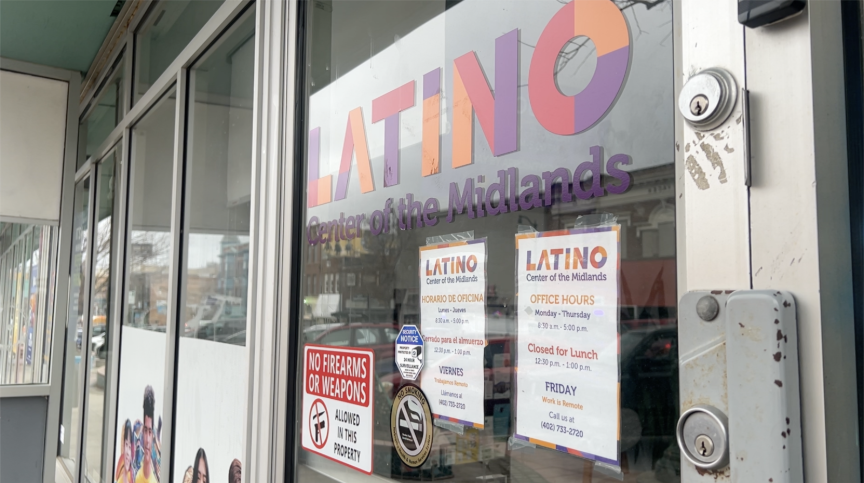
The Latino Center of the Midlands in Omaha relies on multilingual staff to assist families and connect them with essential services.
“Having bilingual employees enhances communication and reduces errors, which can be very costly,” Torres said. “It strengthens the workplace overall.”
Some Nebraska employers formally recognize that value. According to personnel policies from the Nebraska Judicial Branch, employees who regularly use a second language as part of their job responsibilities may receive a 2% to 5% pay increase.
However, compensation policies vary, and not all organizations provide additional pay for bilingual or multilingual skills.
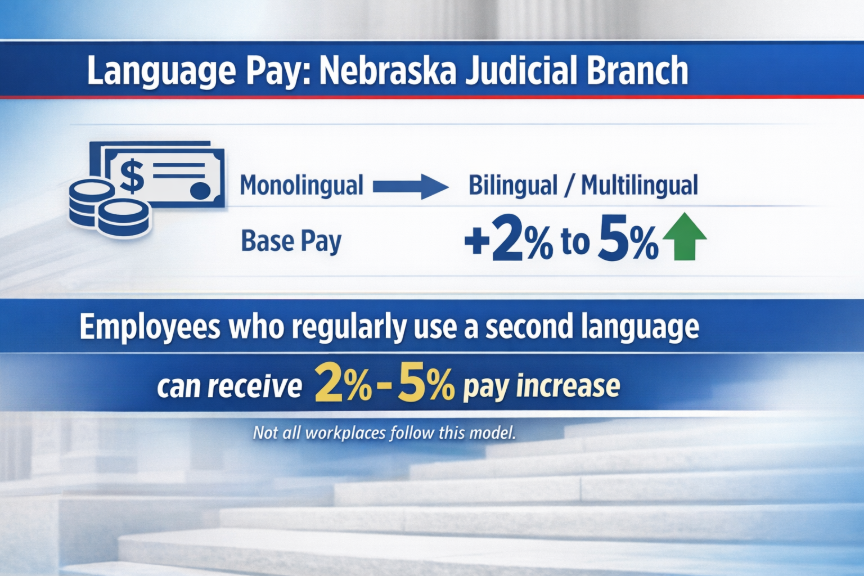
The Nebraska Judicial Branch offers a 2% to 5% pay increase for employees who regularly use a second language as part of their job duties.
At the Latino Center of the Midlands, language access is central to serving immigrant and Latino families. Gustavo Servin-Maciel, the center’s family and community well-being coordinator, said multilingual staff members help bridge communication gaps between families and essential services.
“Employers look for bilingual workers ”Servin-Maciel said, “its essential like having two people”
As conversations about workplace equity continue, multilingual ability remains a growing asset in Omaha’s labor market.