By: Ella Alberts
OMAHA, Neb. — Omaha’s recycling challenges go beyond what residents place in their bins. Limited access to collection services, contamination and gaps in recycling education can all affect how much material is actually recycled.
KETV reported that more than 16% of the material sent to Omaha’s recycling processor in 2024 was not recyclable, up from 11% in 2023, according to Omaha Recycling Coordinator Madeline Ferber. Improper materials can slow down the sorting process, increase costs, and create safety risks at recycling facilities.
Ferber said the city’s contamination rate increased significantly from the previous year, with more residents placing unaccepted items in recycling bins. KETV also reported that batteries and fireworks are particularly dangerous contaminants and that improper materials had contributed to three fires at First Star Recycling since 2019.
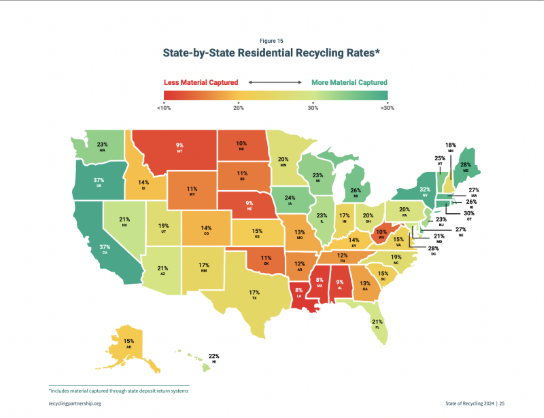
The issue extends beyond Omaha. Nebraska TV reported that the state ranks 40th nationally in recycling, with an estimated rate between 17% and 28%. Kimberly Carroll Steward, executive director of the Nebraska Recycling Council, said the ranking does not tell the whole story. Although 93% of the state has access to recycling, Nebraska’s rural geography can make those services less convenient for some residents.
A separate measure in The Recycling Partnership’s 2024 State of Recycling report places Nebraska’s residential recycling rate at 9%. The report’s state-by-state comparison includes material captured through state deposit-return systems and uses a different methodology from the estimate cited by Nebraska TV. The two figures measure recycling differently and should not be treated as interchangeable.
Access is a particular concern for people who live in apartments. The Recycling Partnership’s 2024 State of Recycling report found that only 37% of multifamily households nationwide have access to recycling, compared with 73% of all U.S. households. The report also estimated that 43% of households participate in recycling, identifying access and education as areas where the system needs improvement.
In Omaha, residents without recycling services where they live may have to rely on public drop-off sites. Wasteline Omaha lists seven designated recycling drop-off locations. Five accept most recyclable materials, while two are designated for glass. This can mean residents have to travel to a location that accepts the specific material they want to recycle (City of Omaha, n.d.).
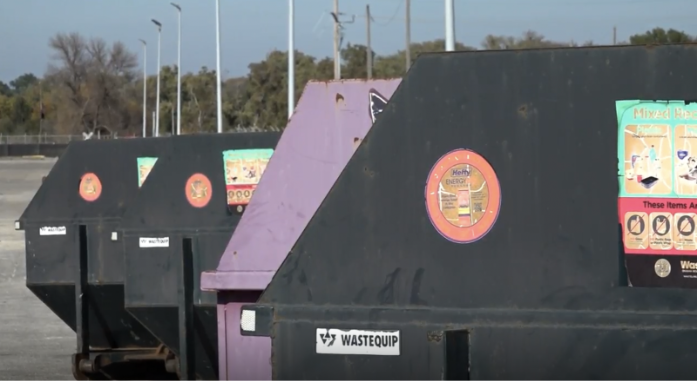
For Omaha resident Kayla Hoffman, recycling can require extra planning. Hoffman said she lives in an apartment without recycling service and has to research where materials can be taken and find the time to drive them there. She said transportation can make recycling even less accessible for people without a car.
“Especially like if I didn’t have a car, that would not even be an option, like it’s kind of a luxury to be able to recycle,” Hoffman said.
In a report for the Flatwater Free Press, reporter Kelly found that Omaha is falling behind comparable cities in recycling opportunities, particularly for apartment residents. The report also found that Omaha diverts more than 20,000 tons of residential recycling annually, but its diversion rate has remained near 16%.
Improving recycling in Omaha will require more than asking residents to sort materials correctly. Expanding convenient access, providing clear information about accepted materials and addressing gaps in apartment recycling services could help more residents take part.