By: Denise Valdez-Alvarez
In Omaha, 13% of the population speak Spanish in homes, making it the second most common language per the U.S. Census Bureau.
According to the Nebraska Local News Ecosystems Report in 2024 by the College of Journalism and Mass Communications in Lincoln, “Telemundo Nebraska is the only professional journalism organization currently providing local news for Spanish speakers with three reporters based in Omaha.”
There are also a couple of digital sites and radio stations like Radio Lobo and El Patron, who cover some local news, but not enough to be a primary news outlet because of their focus on entertainment.
The little available Spanish news and bilingual journalists create a gap brushing over significant stories that impact the community.
So where does the Spanish speaking community turn to in order to bridge the gap?
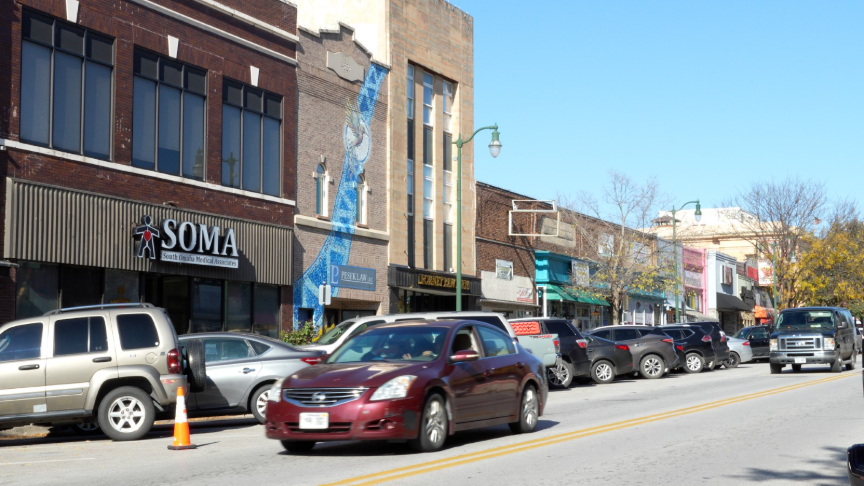
To find out, I went to the heart of South Omaha, the 24th Street business district, to ask the community where and how they get their news.
Many community members did not want to be on camera or answer the questions. Out of the ten individuals who were asked, six agreed to interview. Five of the interviews were on camera and one agreed to an audio interview. All participants are referred to by their first name.
Five interviewees said they get most of their news on social media like Facebook, TikTok, Instagram, and YouTube. Four also said they watch news on TV and one listens through radio.
Interviewee Osmaira said she gets her news off of TikTok and Facebook.
“For my parents they first get their information off Facebook or in the evenings they sit down and watch it on YouTube,” Osmaira said.
All interviewees said they rarely or never fact check the information they come across.
Interviewee Hugo said he doesn’t fact check information unless it’s important to him.
[Translated from Spanish] “It’s not my priority to fact check the information unless it’s affecting me in my neighborhood. But that’s rare.”
Social media can act as the bridge to provide news for Spanish speakers, but in the digital age where misinformation and AI are becoming difficult to identify, the question is what impacts does this cause?
Karlha Velásquez Rivas, former journalist with El Perico and now a freelance journalist, said true journalism follows ethics, training and fact checks resources. However, anyone who has a camera can post online and call it news.
“The audience, they believing everything so that is something like, it’s a little bit dangerous. Because there’s no fact checking, people trust in that thing and then creates misinformation,” Velásquez Rivas said.
When interviewees were asked if they thought there was enough Spanish speaking reporters and news outlets that deliver news in Spanish, many said there’s representation but there could be more.
Interviewee Maria said she likes to see Latino/a reporters on English speaking news outlets, but they don’t report news in Spanish.
Interviewee Eulalia, a second language Spanish speaker, said there is a good amount of Spanish news media outlets, but there are none in her native language Q’anjob’al.
This brings attention to the other non-English speaking communities who are underserved or not served at all. According to American Immigration Council, as of 2023 the Omaha Metro Area has an immigrant population of 8.5%.
To make local Spanish news more accessible, Velásquez Rivas said there are possible solutions.
“We need stronger bilingual journalism too, we need collaboration, we need to train all the time. [Learn] what the others media are doing that have been successful and then we can reply [replicate] that as well,” Velásquez Rivas said.